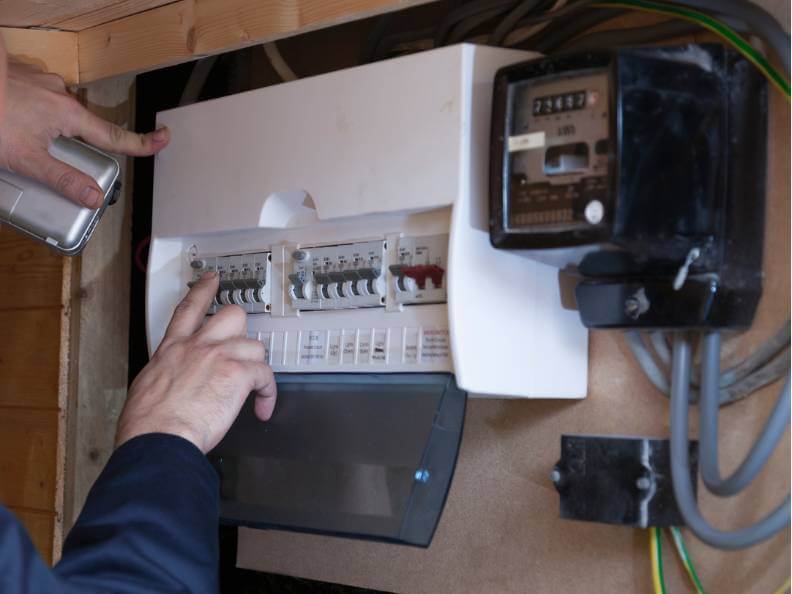

If you’re preparing for a smart meter upgrade, you might expect a quick and easy switch. But for many property owners – particularly in homes built before the 1980s – the process may be delayed or even halted due to asbestos meter boards. While your energy provider may offer a “free” upgrade, the discovery of asbestos in electrical fuse boards can introduce unexpected complexity and cost.
In this blog, we take a closer look at what asbestos meter boards are, how they could affect your smart meter upgrade, and more importantly, what to do if your fuse board contains asbestos.
What are asbestos meter boards?
During the mid-20th century, asbestos was widely used in construction across the UK. Its strength, fire resistance, and insulating properties made it a popular material, especially for electrical safety applications. One such use was in meter boards and fuse boards, where asbestos-containing materials were used as a base to mount electrical equipment.
These boards were typically made from asbestos insulating board (AIB) or asbestos cement. Both types were favoured for their low flammability and resistance to heat, but they’re now known to pose health risks when disturbed.
While AIB is more friable (easily broken down and more likely to release airborne fibres), even asbestos cement can become hazardous if drilled, cut, or removed incorrectly. These materials are no longer used today, but asbestos meter boards remain in many older residential and commercial properties.
Are asbestos meter boards still a problem today?
Asbestos meter boards are only a problem if you’re planning any property upgrades, renovations, or smart meter replacements. Undisturbed asbestos materials that are in good condition pose little or no immediate risks. However as mentioned, any work involving your electricity meter or fuse board may involve disturbing the asbestos-containing material.
With the rollout of smart meters continuing across the UK, suppliers are finding that many properties still have asbestos meter boards. Before any upgrade can take place, the asbestos needs to be professionally assessed, and in many cases, removed by a licensed contractor, like Midlands Asbestos Solutions (MAS). This is particularly true for AIB boards, which are classed as a licensed asbestos product due to the risk posed when disturbed.
Why your smart meter upgrade might not be “free” after all
Energy suppliers often advertise free smart meter installations, but these offers don’t account for complications like asbestos in electrical fuse boards. Many customers are only made aware of the issue when engineers arrive and refuse to proceed with the upgrade due to safety concerns.
If your existing fuse board contains asbestos, the energy provider will not remove or disturb it. Instead, they’ll typically inform you of the issue and advise that you arrange for asbestos testing and, if needed, removal. That means the homeowner or landlord is responsible for resolving the issue before the new meter can be installed.
This can be a shock for property owners, especially when they assumed the upgrade would be free and straightforward. The reality is that if asbestos board replacement is required, it may involve:
- Sample testing to confirm the presence of asbestos
- Licensed removal and disposal
- You, the property owner, will need to coordinate with National Grid or the Distribution Network Operator (DNO) to power down the system
- Temporary disconnection and later reinstatement of the meter by a qualified electrician
This can lead to unexpected costs, delays, and a more complex project than originally anticipated.
How to identify if you have an asbestos meter board
It’s not always easy to tell if you have an asbestos meter board just by looking. Asbestos-containing boards may resemble modern equivalents, but if your property was built before 1983, there’s a high probability that your electricity meter board contains asbestos.
Some common signs may include:
- A grey or off-white board material behind the meter or fuse board
- Visible signs of ageing or damage (crumbling, flaking edges)
- Historical building records noting the use of asbestos
- Installer refusal to work due to suspected asbestos
The only safe way to be sure is through professional asbestos testing. At MAS, we can safely inspect, sample, and test your meter board to determine whether asbestos is present, and if so, what type.
What to do if your fuse board contains asbestos
If after your test confirms you have asbestos in your fuse board, it’s important to follow the below steps to ensure you’re adhering to strict UK asbestos safety procedures:
- Notify the relevant authorities – if the material is licensed asbestos (e.g. AIB), a 14-day notice must be submitted to the Health & Safety Executive (HSE) before work can begin. This will normally be submitted by your chosen licensed asbestos contractor.
- You will need to coordinate with the power company – the electrical supply will need to be isolated, typically by the DNO or National Grid. This requires careful scheduling to align with your asbestos contractor.
- Safe removal by licensed professionals – the asbestos board must be removed using approved techniques, with full containment, decontamination, and disposal measures in place.
- Clearance testing – air testing should be conducted by an independent analyst to confirm the area is safe before reoccupation or meter work can resume.
- Documentation – all stages, from risk assessments to disposal, should be recorded and issued to ensure compliance and peace of mind.
At MAS, we can manage testing, sampling, notification to the HSE, and the safe removal of the asbestos on your behalf. The only action you need to complete is the coordination of your electrical supply with your power company.
Need help with your asbestos meter board?
If you’re planning a smart meter upgrade and you suspect your fuse board may contain asbestos, don’t leave it to chance.
At Midlands Asbestos Solutions, we have extensive experience in testing and identifying asbestos meter boards, managing licensed asbestos removals, coordinating with utility providers to ensure safe disconnection, and providing all necessary paper work and clearance certificates.
Whether you’re a homeowner, landlord, or housing association, we offer clear advice, fast service, and full legal compliance. Don’t let an unexpected asbestos board replacement delay your upgrade. Get in touch with us today for trusted, professional support.