
Asbestos work must always be approached with care, even when the task doesn’t require a licensed asbestos contractor, like Midlands Asbestos Solutions (MAS). Some lower-risk asbestos tasks may fall under non-licensed asbestos work, but this doesn’t mean the work is risk-free, unregulated, or suitable for anyone to carry out without the right knowledge and controls.
Understanding the difference between licensed asbestos work, non-licensed work with asbestos, and notifiable non-licensed work (NNLW) is essential for protecting people from exposure and staying compliant with asbestos regulations.
In this blog, we’ll explain what non-licensed asbestos work is, when it may apply, and the steps that you should take before any work begins.
What is non-licensed asbestos work?
Non-licensed asbestos work refers to certain lower-risk tasks involving asbestos-containing materials (ACMs) that don’t legally require a licensed asbestos contractor. The tasks are usually short in duration, lower intensity, and involve materials where asbestos fibres are more firmly bound into the product.
This might include some work involving:
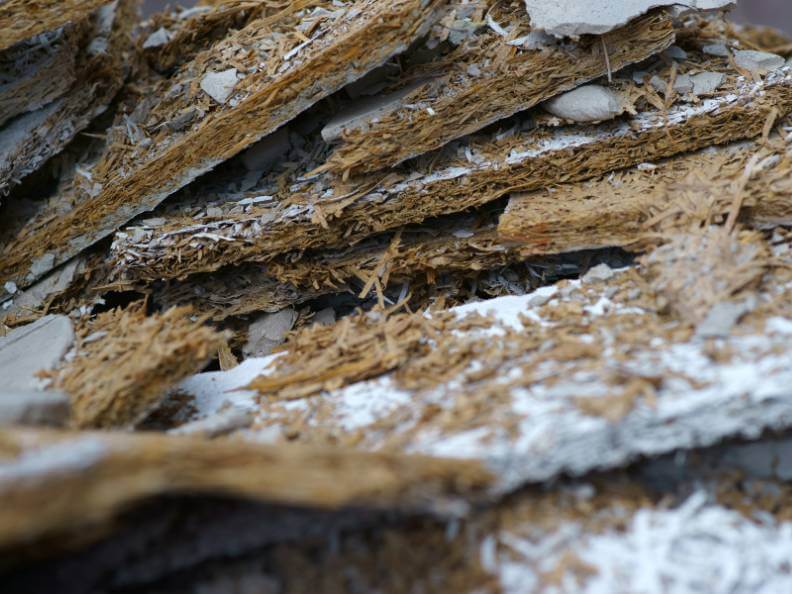
- Asbestos cement
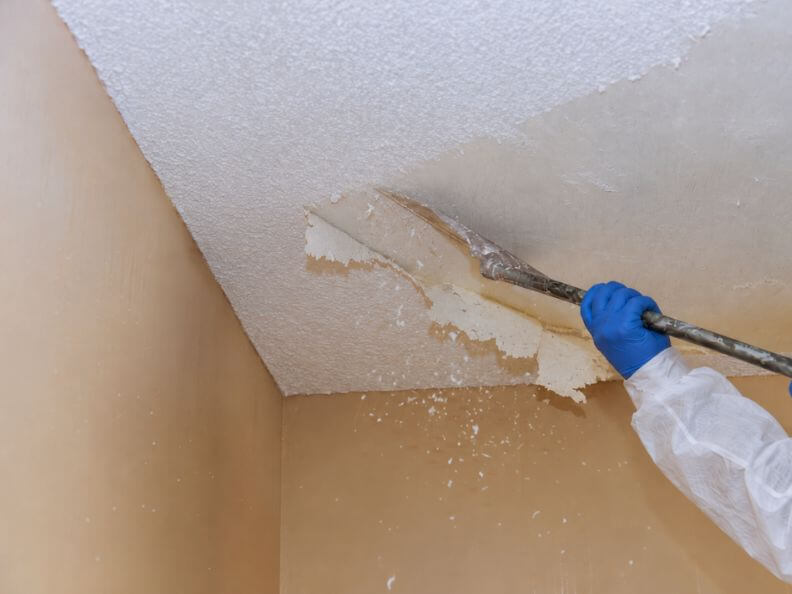
- Textured decorative coatings
- Certain floor tiles
- Bitumen products
- Gaskets
- Resins
- Other bonded materials where the risk of fibre release is lower
There are two broad categories of non-licensed asbestos work to be aware of:
- Non-notifiable non-licensed work – this is generally lower risk and doesn’t need to be reported to the enforcing authority before work begins.
- Notifiable non-licensed work (NNLW) – this is still non-licensed, but it carries additional legal requirements because the work presents a higher level of risk.
The term “non-licensed” can be misleading though. It doesn’t mean the work is simple, safe to carry out without training, or exempt from regulation. Any work involving asbestos must still be carefully assessed, planned, and controlled. HSE guidance makes clear that all non-licensed and notifiable non-licensed asbestos work needs a risk assessment, suitable controls, and the correct level of information, instruction, and training.
Does non-licensed asbestos work still have legal obligations?
Yes. Non-licensed asbestos work still has legal obligations. This is one of the most important points for property owners, employers, contractors, and tradespeople to understand.
Even where asbestos work doesn’t require a licence, it must still be carried out safely and in line with the Control of Asbestos Regulations 2012. This includes:
- Assessing the risk
- Preparing a suitable plan of work
- Using appropriate control measures
- Preventing the spread of asbestos fibres
- Using suitable personal protective equipment (PPE) and respiratory protective equipment (RPE) where required
- Ensuring asbestos waste is handled and disposed of correctly
Workers also need the correct level of training. Asbestos awareness training alone is designed to help people avoid disturbing asbestos; it’s not sufficient for workers who are actually going to disturb ACMs.
Anyone carrying out non-licensed work with asbestos will require additional job-specific training, including safe work practices, control measures, protective equipment, waste handling procedures, emergency procedures, and relevant legal requirements.
Where the task falls under NNLW, employers have extra duties. These include:
- Notifying the relevant enforcing authority
- Identifying the work area
- Ensuring medical examinations are carried out where required
- Keeping health records or registers of work
This means that even non-notifiable asbestos work should never be treated casually. The classification affects the legal process, but it doesn’t remove the need for safe working methods.
What are the criteria for non-licensed asbestos work?
Whether a task is licensed, non-licensed, or notifiable non-licensed, it’s not enough to look at the material alone as several factors should be considered.
HSE guidance states that deciding whether work is licensed, notifiable non-licensed work, or non-licensed depends on the type of work being carried out, the type of material being worked on, and the condition of that material. These are key parts of the risk assessment that must be completed before work starts.
In general, non-licensed asbestos work is more likely to apply where:
- The material is in good condition
- Asbestos fibres are firmly bonded within the product
- The work is short duration
- The task is unlikely to release high levels of asbestos fibres when correct controls are used
By contrast, work is more likely to require a licensed contractor where:
- The ACM is friable, damaged, or loose
- The work is likely to release fibres easily
- The task involves higher-risk materials such as pipe-lagging, sprayed coatings, loose-fill insulation, asbestos millboard, or asbestos insulating board
- The work isn’t short in duration
Notifiable non-licensed asbestos work sits between these two categories. It doesn’t require a licensed contractor, but it does need to be notified and managed under additional requirements.
Because the distinction can be complex, it’s always best to seek professional advice before assuming that asbestos work is non-licensed or non-notifiable.
What are some common examples of non-licensed work with asbestos?
Non-licensed work with asbestos can include numerous tasks such as maintenance, sampling, minor repair, or controlled removal tasks.
The most common examples of non-licensed work include:
- Drilling textured decorative coatings for fixtures and fittings
- Encapsulation or sealing of ACMs that are in good condition
- Certain work on materials where fibres are firmly bound into a matrix (e.g. certain paints, bitumen, resins, and rubber products)
- Collecting and analysing samples to identify the presence of asbestos
- Carefully removing small quantities of bonded ACMs
- Working with asbestos cement products in good condition
- Removing certain asbestos-containing floor tiles using controlled measures
It’s important to note that these examples should never be treated as automatic permission to proceed. The exact task, condition of the material, and level of disturbance all matter. The safest approach is to have the material properly identified and the task assessed before any work begins.
If you would rather not take that on yourself, our domestic asbestos removal team carries out non-licensed work in homes across the Midlands.
Who can conduct non-licensed asbestos work?
Non-licensed asbestos work should only be carried out by competent people with suitable training, equipment, and procedures. It shouldn’t be undertaken by someone who simply suspects a task is low risk.
A competent person carrying out non-licensed asbestos work should:
- Understand the risks of asbestos exposure
- Know how to prevent fibre release
- Use appropriate control measures
- Wear suitable PPE and RPE where required
- Follow a clear plan of work
- Manage asbestos waste safely
For employers, the duty is more formal. They must ensure that workers have received the correct level of information, instruction, and training for the work being carried out. HSE states that workers who plan to disturb asbestos need training beyond asbestos awareness, and that this should reflect whether the work is non-licensed, notifiable non-licensed, or licensed.
In practical terms, this means that a general builder, maintenance contractor, landlord, or property owner shouldn’t assume they can carry out asbestos work just because a licence may not be legally required. If there is uncertainty around the material, task or risk level, a professional asbestos contractor, like MAS, should be consulted.
For homeowners, it’s especially important to avoid DIY asbestos work. Even lower-risk ACMs can become dangerous if broken, sanded, drilled, scraped, or removed incorrectly.
What steps do I need to take to conduct non-licensed asbestos work?
Before any non-licensed asbestos work begins, there are a few key steps that should be taken which include:
- Confirm if asbestos is present – this usually involves asbestos sampling or an asbestos survey, depending on the type of property and the work being planned.
- Assess the ACM – if asbestos has been identified, you should assess the ACM, its condition, where it’s located, how likely it is to be disturbed, and what work is planned. This will help determine whether the task is licensed, NNLW, or non-notifiable non-licensed work.
- Complete a suitable risk assessment – this should identify who could be exposed, how fibres could be released, what controls are needed, and how the work will be carried out safely.
- Prepare a plan of work – this should explain the method of work, tools to be used, control measures, PPE and RPE requirements, decontamination arrangements, emergency procedures, waste handling and disposal process, and how the area will be cleaned afterwards.
If the work is classed as NNLW, the relevant enforcing authority must be notified before work starts. HSE states that a notice period is required before the work begins, but there is no minimum notice period and you don’t need to wait for permission before starting the work.
Speak to us for more expert advice
Understanding whether a task is licensed, non-licensed, notifiable, or non-notifiable can be difficult. The classification depends on the ACM, its condition, the proposed work, and the risk of fibre release.
At Midlands Asbestos Solutions, we can help you understand the safest and most appropriate approach before any non-licensed asbestos work begins. Our team can support with asbestos surveys, sampling, testing, removal, disposal, and practical guidance for domestic, commercial, and industrial properties.
If you suspect asbestos is present or need advice on non-licensed asbestos work, speak to our professional team before disturbing the material. We can assess the situation and help you take the right next steps safely and responsibly.