

Discovering asbestos when buying a house can be an unexpected concern, especially if you’ve already found a property you love. However, finding asbestos doesn’t automatically mean you should walk away from the purchase. Asbestos remains present in many UK homes built before 2000, and in the majority of cases it can be safely managed, monitored, or removed where necessary.
The key is understanding what has been found, the condition it’s in, and whether it’s likely to affect your plans for the property.
In this blog, we’ll explain what to do if you find asbestos when buying a house, along with looking at the types of asbestos commonly found in residential properties, and when it may be worth arranging a professional asbestos survey.
Is finding asbestos when buying a house a dealbreaker?
In most cases, no. Finding asbestos when buying a house isn’t necessarily a reason to abandon a purchase. Asbestos was widely used in residential construction throughout much of the twentieth century, meaning it can still be found in many properties across the UK.
The presence of asbestos doesn’t automatically make a property unsafe. Many asbestos-containing materials (ACMs) remain in good condition and can continue to be managed safely without immediate removal. The important factor is understanding the location, type, condition, and potential risk associated with the material.
For many buyers, the discovery of asbestos simply becomes another consideration during the purchasing process, similar to identifying damp, roof repairs, or electrical upgrades. The key is obtaining accurate information so you can make an informed decision before proceeding.
When and how is asbestos in house buying usually discovered?
In many cases, asbestos in house buying is discovered during the conveyancing process, property surveys, or when further investigations are carried out on an older home. Standard property surveys may highlight materials that could potentially contain asbestos, particularly in buildings constructed before 2000.
Sometimes asbestos is identified because the seller already has previous survey documentation. In other cases, asbestos might be found when visible materials such as garage roofs, pipe insulation, or ceiling panels are noted during an inspection.
It’s also quite common for asbestos in house buying to be discovered when buyers begin planning renovations. A property that appears perfectly normal during viewings may contain asbestos materials hidden behind walls, above ceilings, beneath flooring, or within service cupboards. This is why many buyers choose to arrange a specialist refurbishment asbestos survey before committing to renovation works after completion.
What types of asbestos might be found in a residential property?
Asbestos was incorporated into a wide range of construction materials, meaning it can be found in various locations throughout older homes.
Some typical types of asbestos you might find include:
Garage roofs
One of the most common examples is asbestos cement garage roofing. These corrugated sheets were widely used due to their durability and weather resistance. While they can often remain in place safely if in good condition, any damaged or deteriorating sheets may require professional assessment.
Ceiling tiles
Some older ceiling tiles and ceiling coatings may contain asbestos. These materials can be found in residential properties built or renovated during periods when asbestos use was common. Arranging testing is often recommended before carrying out any refurbishment work involving ceilings.
Old pipe lagging
Pipe insulation and lagging can contain asbestos and is often considered a higher-risk material due to its friable nature. It’s commonly found around older heating systems, pipework, and boiler installations.
Floor tiles
Vinyl floor tiles and some associated adhesives may also contain asbestos. These materials are often found during renovation projects when old flooring is being lifted and replaced.
AIB in cupboards
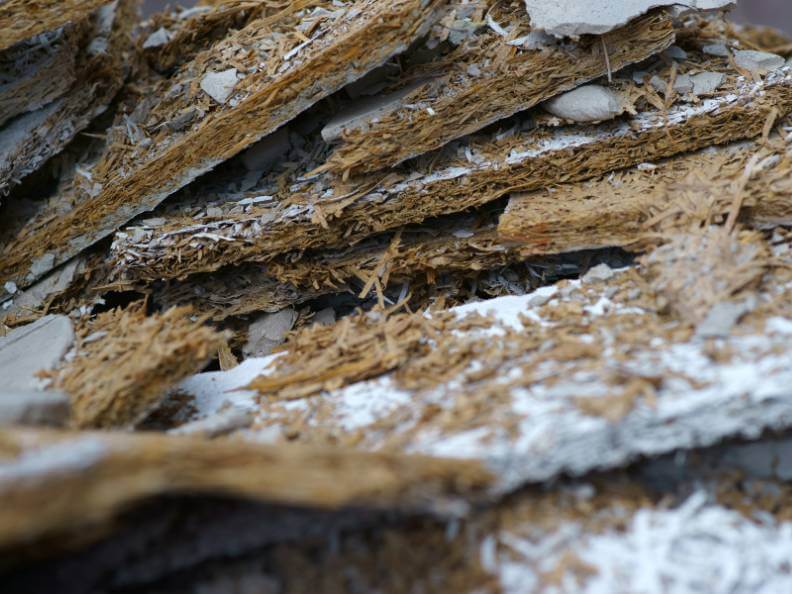
Asbestos insulating board (AIB) was commonly used in airing cupboards, boiler cupboards, service risers, and partition walls. AIB only presents a greater risk if disturbed, which is why it’s important to have it assessed by qualified professionals, like Midlands Asbestos Solutions (MAS), before any work is undertaken.
What are your options if asbestos is found?
If you end up buying a house with asbestos, there are several options available depending on the circumstances.
The first step is to understand exactly what has been found. Not all asbestos materials present the same level of risk, and not all require immediate removal. A professional assessment from MAS can help determine whether the material can remain safely in place, requires monitoring, or would benefit from removal.
Some people buying a house with asbestos use it as part of the property negotiation process, particularly if future remedial work is required. Others choose to proceed with the purchase and budget for any management or removal work after completion.
The most important thing is to avoid assumptions. The presence of asbestos alone doesn’t necessarily indicate a significant problem. Obtaining expert advice allows you to understand the situation fully and make decisions based on evidence rather than uncertainty.
Should you get an asbestos survey before completing?
If asbestos is suspected when viewing a property or during a property survey, arranging an asbestos survey before exchange or completion can provide valuable peace of mind.
An asbestos survey can help confirm whether asbestos is present, identify the types of materials involved, assess their condition, and provide recommendations for ongoing management or removal if required. This information can be particularly useful if you plan to renovate the property, extend it, or carry out significant maintenance work in the future.
For many buyers, an asbestos survey helps remove uncertainty from the purchasing process. Rather than relying on assumptions, you’ll get clear information about the property and any potential asbestos-related considerations.
The survey findings can also support discussions with sellers, solicitors, and mortgage providers if additional information is required during the transaction.
Find out how we can help if you find asbestos
Finding asbestos when buying a house can feel daunting at first, but doesn’t have to derail your property purchase. With the right information and professional guidance, asbestos can often be managed safely and effectively.
At Midlands Asbestos Solutions, we help homeowners across Nottinghamshire, Derbyshire, Leicestershire, and the wider Midlands area understand and manage potential asbestos risks. Our experienced team provides asbestos sampling, surveys, testing, removal, and ongoing advice if you’re buying a house with asbestos.
Whether you’ve discovered suspected asbestos and need confirmation before completing a purchase, or you’d like advice on managing asbestos in your future home, we can help. Don’t hesitate to contact us today to arrange a survey or to speak to our specialist team.