If your property has an older textured ceiling, an asbestos cement garage roof, or panels that may contain asbestos, you might be wondering whether you can paint over it rather than have it removed. In many cases, painting over asbestos is possible, and it can be an effective way to seal the surface and reduce the risk of fibres being released.
However, painting asbestos isn’t suitable in every situation. The material needs to be in good condition, and how the surface is prepared and painted matters just as much as the paint itself. Sanding, scraping, or scrubbing an asbestos surface can disturb the very fibres you’re trying to seal in.
In this blog, we’ll explain which asbestos surfaces can be painted, the equipment you’ll need, how to prepare and paint safely, and what to do once the job is finished.
Can you paint over asbestos?
The short answer is yes. If an asbestos-containing material (ACM) is in good condition, painting it is one of the simplest ways to keep it that way. A layer of paint binds the surface, protects it from knocks and weather, and helps stop fibres being released.
That matters because asbestos is only a real risk when it’s damaged or disturbed. In good condition and left alone, it’s usually safer where it is. Removing it can create more risk than managing it in place.
Painting is a simple form of asbestos encapsulation, which means sealing the material rather than removing it. HSE lists painting asbestos insulating board (AIB) in good condition, and maintenance work on asbestos cement, as non-licensed work. Non-licensed doesn’t mean unregulated, though. You still need the right equipment, the right method and, if you’re working on someone else’s property, the right training.
Before you pick up a brush, there are two questions to answer:
– Is it definitely asbestos? You can’t always tell by looking, so if you’re unsure, it’s wise to get it tested first. Testing tells you what it is and what condition it’s in.
– Is it in good condition? Cracked, crumbling, flaking, or water-damaged material shouldn’t be painted until it’s been assessed. Paint won’t hold damaged material together, and preparing it can release fibres.
What asbestos surfaces can I paint?
You can usually paint asbestos cement and textured coatings, and sometimes AIB. The material just needs to be in good condition. Loose, crumbly materials such as pipe lagging and sprayed coatings are a different matter, and should be left to a licensed contractor.
Here’s a quick breakdown of what you can and can’t paint:
| Material | Where can you find it? | Can you paint it? |
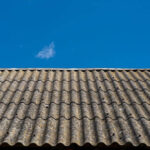
| Asbestos cement | Garage and shed roofs, wall cladding, soffits, gutters, downpipes, and flues | Usually yes, if it’s in good condition. HSE has a task sheet for it (A16) |
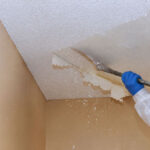
| Textured coatings (e.g. Artex) | Ceilings and some walls in homes built before 2000 | Usually yes, if it’s in good condition. It’s a common way to manage it. |
| Asbestos insulating board (AIB) | Ceilings tiles, partition walls, airing cupboards, fire doors, and under stairs | Sometimes. Only if it’s undamaged and the job is short (HSE task sheet A7). Longer AIB work needs a licensed contractor. |
| Floor tiles | Kitchens, hallways, and older commercial floors | Not usually. Covering them with new flooring is the more common option. |
| Pipe lagging and sprayed coatings | Boilers, pipework, steel beams, and plant rooms | No. These materials are friable, which means they crumble easily. You should have them professionally assessed. |
Whatever the material, you shouldn’t paint it if it’s:
– Cracked, broken, crumbling, or flaking
– Water-damaged or soft to the touch
– Somewhere it will keep getting knocked, scuffed, or drilled
– Covered in moss, lichen, or heavy dirt that can’t be removed without scrubbing
If any of these apply, you should speak to an expert before starting any paint work. Minor damage can often be repaired before painting. More serious damage may mean removal is the safer option.
Preparing for painting over asbestos
Good preparation is what makes painting over asbestos safe. Most of the risk comes before the first coat goes on, as it’s when people are tempted to sand, scrape, or scrub the surface to get a better finish.
Essential equipment you’ll need
HSE’s task sheets for painting asbestos cement and painting undamaged AIB list the following kit to have ready before you start to paint:
– Disposable overalls with a hood (Type 5 overalls are suitable)
– Single-use disposable gloves
– Boots without laces. Laces trap dust and are hard to clean
– Respiratory protection where your risk assessment calls for it. HSE states a respirator isn’t normally needed for painting sound material. If one is needed, use a disposable FFP3 mask to EN 149 that’s fit-tested to your face
– Heavy-duty (500-gauge) polythene sheeting and duct tape to protect the area around the work
– Warning tape and notices to keep other people away
– Low-solvent paint for asbestos, or a purpose-made encapsulation coating
– A low-pressure sprayer, brush, or roller
– A bucket of water and cloths for damp-wiping and cleaning up
– Asbestos waste bags (a red inner bag and a clear outer bag) for everything you’ll throw away afterwards
For AIB, HSE also suggests a Class H vacuum cleaner if one is available. Never use an ordinary household vacuum on asbestos dust, as it spreads the fibres rather than trapping them.
Preparing surfaces
As mentioned, prepping the surface when painting over asbestos is usually where people fall short. Here are some tips for prepping safely:
1. Check the material – look closely for cracks, chips, flaking, or soft patches. If there’s damage, stop and get it repaired or assessed before painting.
2. Restrict access – close doors, put up warning tape and notices, and keep children, pets, and anyone not involved away from the area.
3. Protect the area – cover floors and nearby surfaces with polythene sheeting. Tape it to non-asbestos surfaces only.
4. Remove dust gently – wipe the surface with a damp cloth. Don’t brush it dry or rub it hard.
5. Never sand, scrape, or wire-brush the surface – HSE is clear on this: never prepare an asbestos surface by sanding or rubbing it down. You should also avoid pressure washing asbestos cement roofs, because the force of the water can break up the surface and spread debris.
6. Check the conditions – for outdoor jobs, choose a dry, still day so the surface is dry and paint doesn’t drift. For roof paint jobs, be sure to plan safe access also. Asbestos cement sheets are fragile and won’t take your weight, so avoid walking over the roof.
Tips for applying paint over asbestos safely
When it comes to painting over asbestos, the aim is simple: get an even, sealing coat on the asbestos material without wearing away the surface underneath. If you’re about to start an asbestos paint job, here are some tips to keep in mind:
– Spray at low pressure where you can – HSE recommends low-pressure spraying, using a slow, sweeping motion. You should avoid using a pressure washer as this can damage the surface and create a mist.
– Be gentle when using a brush or roller – use light strokes and keep moving. Going over the same patch again and again wears the surface down.
– Choose the right product – low-solvent paint for asbestos is ideal for sound surfaces. Purpose-made encapsulation coatings give a tougher, more flexible seal, and are often the better choice for outdoor asbestos cement. Be sure to check what the manufacturer says what type of asbestos the product is suitable for.
– Apply thin, even coats – let each coat dry fully before adding the next. One heavy coat is more likely to crack or peel, and this matters, because HSE warns that painting done wrongly can cause the product to fail.
– Don’t drill, fix, or screw into the ACM – after you’ve painted the asbestos, avoid drilling, fixing, or screwing anything on the finished material as this can disturb it.
– Stop if anything changes – if the surface starts to crumble, flake, or come away, stop work, damp it down gently, and seek professional advice.
What to do after painting over asbestos
Painting doesn’t make the asbestos go away. Ultimately, it’s still there, and so you’ll need to clean up safely and keep an eye on it regularly.
When cleaning up:
– Wipe your tools and the work area with damp cloths
– Carefully fold up the polythene sheeting, dirty side in
– Put the sheeting, cloths, used brushes or rollers, gloves, and overalls into the red asbestos waste bag and tape it shut. Then put it inside the clear outer bag and tape that too.
– Wash your hands and face before you eat, drink, or leave the area.
– Dispose of the asbestos waste at a licensed waste site, not in your household bin or skip.
It’s also important to make a note of what you painted, where, when, and with which product. If you ever sell the property or have building work done, that information will help.
For non-domestic buildings, it’s a legal requirement. Under the Control of Asbestos Regulations 2012, whoever is responsible for maintaining the building has a duty to manage asbestos in it. That includes keeping the asbestos register and management plan up to date. HSE states the register should be reviewed at least once a year.
You should also check the painted asbestos area at least once a year, and after storms, leaks, or after it’s been disturbed. If the paint is peeling or the surface underneath looks damaged, it may need repairing, repainting, or professional encapsulation.
Need expert help?
If you have asbestos in your property and you’re unsure of its condition, or whether it can be painted over, we can help.
At Midlands Asbestos Solutions (MAS), we provide asbestos testing, surveys, and professional encapsulation for homes and businesses across the UK. With over 30 years experience, we’re proud to hold an ARCA Gold Audit and ISO 9001:2015 certification, meaning you can be sure you’re getting an outstanding service.
If you’d like to learn more about painting over asbestos, or you’d like to enquire about our encapsulation services, be sure to get in touch with us today.