
If you’ve ever wondered how asbestos is disposed of, the short answer is: very carefully and under strict legal controls. Asbestos is classed as hazardous waste in the UK, which means it can’t be treated like general building rubbish or disposed of through standard waste channels.
Whether asbestos is found in a domestic garage roof, commercial pipe insulation, or as part of a larger refurbishment project, the proper disposal of asbestos is essential to protect both people and the environment.
In this blog, we look at what types of asbestos materials require careful disposal, the process of professional asbestos disposal, and why it’s so important.
Why is the disposal of asbestos waste strictly regulated?
The disposal of asbestos waste is tightly controlled because asbestos fibres can become harmful if released into the air and inhaled. While asbestos-containing materials (ACMs) in good condition can often be managed safely in place, once the materials are damaged, removed, or disturbed, they must be handled as hazardous waste.
Improper handling can increase the risk of contamination, not just for the person dealing with the material, but also for anyone nearby. Asbestos fibres are microscopic, meaning they can’t be seen with the naked eye, and without the correct controls in place, they can spread far beyond the immediate work area.
This is why asbestos disposal is governed by strict legislation, including environmental and hazardous waste regulations that set out how asbestos must be packaged, transported, and disposed of. These rules are designed to ensure asbestos waste is managed safely at every stage and doesn’t pose an unnecessary risk to people, properties, or the wider environment.
What types of asbestos waste require disposal?
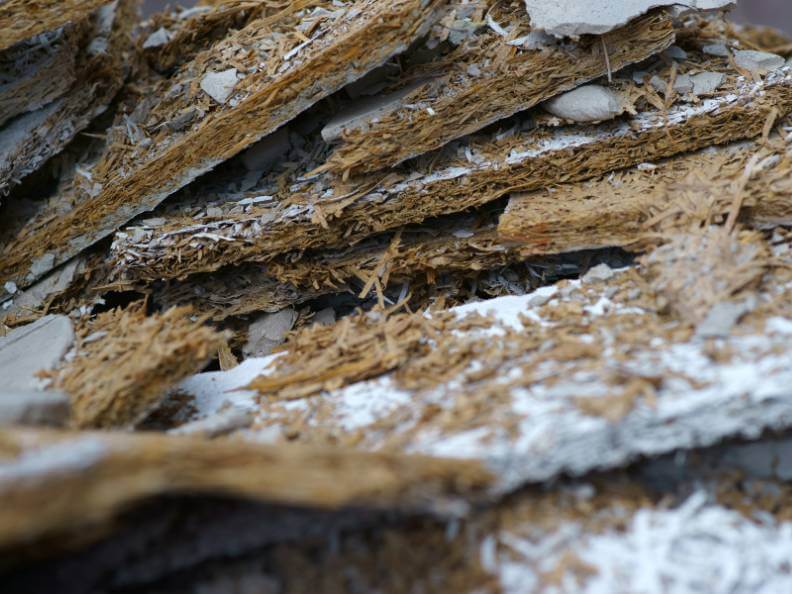
Asbestos waste can take many forms, depending on the type of building and the materials involved. In both domestic and commercial settings, some common examples include:
- Asbestos cement sheets
- Asbestos insulating board (AIB)
- Pipe lagging
- Textured coatings
- Insulation materials
- Contaminated debris
- Damaged building products
In a domestic setting, these products might be found in old garage roofing panels, soffits, guttering, or damaged floor tiles for example. In commercial environments, they may be found in insulation systems, plant rooms, partition walls, suspended ceilings, or larger refurbishment projects.
Regardless of the material type, if asbestos is present and removal is required, it must be handled and disposed of correctly.
What is the process of safe asbestos waste disposal?
The proper disposal of asbestos must follow a strict process that is designed to prevent contamination and ensure compliance with UK regulations.
Here’s how we carefully and safely dispose of asbestos waste at Midlands Asbestos Solutions (MAS):
Collection and packaging
Our first step is to safely collect the asbestos waste and package it correctly. The exact packaging method will depend on the type, size, and condition of the material, but our trained team handles all asbestos carefully to reduce the risk of fibre release during collection.
The waste is then securely sealed and clearly labelled as hazardous asbestos waste. Larger materials, such as sheets or boards, are wrapped appropriately, while smaller waste materials, contaminated debris, and disposable PPE are securely contained. This careful packaging helps prevent contamination during transport and disposal.
Transport using a licensed waste carrier
Once the asbestos waste has been safely packaged, we transport it using our licensed waste carrier service. Asbestos can’t be moved or disposed of like ordinary building waste, so it must be handled by an authorised company with the correct procedures in place.
We ensure the waste remains secure throughout transport and provide the required documentation, including waste consignment notes, so you have a clear record that the asbestos has been handled legally and responsibly.
Disposal at a licensed landfill
The final stage is disposal at an authorised hazardous waste facility. Only certain landfill sites in the UK are licensed to accept asbestos waste, so we make sure your waste is taken to the correct approved location.
Once it’s there, the asbestos is handled in line with strict disposal requirements, helping to prevent future contamination and ensuring the materials remain safely managed after it leaves your property.
Where is asbestos disposed of in the UK?
When disposing of asbestos, it can only be taken to specialist disposal facilities that are licensed to accept hazardous asbestos waste.
Not every landfill site is permitted to accept asbestos, which is why using an experienced contractor, like MAS, is so important. Attempting to dispose of asbestos through the wrong channels can result in legal issues, environmental risk, and potentially unsafe handling.
At MAS, we ensure all asbestos waste is transported and disposed of through the correct licensed routes. Our team manages the entire process, giving clients confidence that the waste has been dealt with safely, legally, and in full compliance with current regulations.
Can you dispose of asbestos yourself?
The short answer to this question is no, professional support is always strongly recommended.
This is because loose, damaged, friable, or licensed asbestos materials should always be handled by trained professionals. These materials present a higher risk if disturbed, and incorrect handling can create unnecessary exposure risks.
Even when dealing with lower-risk bonded asbestos materials, disposal requirements still apply. Asbestos can’t simply be placed in a skip, mixed with other waste, or disposed of through normal household or trade waste collections.
The safest approach is to always seek professional advice before attempting to handle any suspected asbestos material. This ensures the correct disposal route is followed and reduces the risk of accidental contamination.
Speak to us for licensed asbestos disposal
Understanding how asbestos is disposed of is important, but ensuring it’s handled correctly is even more important. From safe collection and transport, to fully compliant disposal, asbestos waste should always be managed with care and by experienced professionals.
At Midlands Asbestos Solutions, we provide fully licensed asbestos waste removal and disposal services for domestic and commercial clients across Nottinghamshire, Derbyshire, Leicestershire, and the wider Midlands. Whether you’re dealing with a small domestic collection or a larger commercial asbestos project, our experienced team can manage the process safely from start to finish.
If you need support with the disposal of asbestos waste, professional advice, or licensed removal services, don’t hesitate to get in touch with our team today.